Malwood Walk House
An exceptional Grade II listed Arts & Crafts house, set in wonderful grounds with swimming pool, gate house, a range of equestrian outbuildings and direct access to the New Forest.

Site Search:

Arts and Crafts is one of the most picturesque and charming architectural styles of the last 150 years. It's perceived to be as intrinsically British as fish and chips so it may come as a surprise to know that Arts and Crafts was heavily influenced by the Mingei folk art movement in Japan.
The Arts and Crafts movement began gaining influence in the late 1800s, inspired by the ideas of architect Augustus Pugin, textile designer William Morris and writer John Ruskin. William Morris – who is famously quoted as saying, 'Have nothing in your house which you do not know to be useful or believe to be beautiful' – is perhaps the best known exponent of the Arts and Crafts style and his designs are still in widespread use today. By the early 20th century the movement had spread across Europe and to North America.
The style was sparked by a ground movement towards the revival of traditional craftsmanship in simple forms. The Arts and Crafts pioneers felt that the rapid rise of industrial methods and factory production had not only led to a reduction in quality, but also a tendency to place excessive ornamentation over the principles of design, construction and quality.
The movement was also concerned with social reform. Taking its lead from John Ruskin’s social criticism, the proponents of Arts and Crafts believed that the Industrial Revolution had led to ‘servile labour’ and the de-skilling of the workforce.
The architectural style which developed from Arts and Crafts has at its heart five main principles: clarity of form or structure, variety of materials, asymmetry, traditional construction and craftsmanship. Buildings were constructed within the local vernacular – that is, using local materials and traditions. As such, buildings created within the Arts and Crafts movement would differ from area to area. There are Arts and Crafts homes dotted around the UK, particularly across the Home Counties and the South East, the Cotswolds, the Lake District, the Midlands and Scotland.
Thanks to the utilisation of skilled, traditional construction methods, it’s no surprise that Arts and Crafts houses have stood the test of time and influenced a significant part of our architectural history. Featured below is a selection of some of the finest homes currently on the market that embody the spirit.
An exceptional Grade II listed Arts & Crafts house, set in wonderful grounds with swimming pool, gate house, a range of equestrian outbuildings and direct access to the New Forest.
A magnificent Arts & Crafts home of exceptional architectural integrity, designed by renowned architect William Kerr and completed in 1909, set within beautifully landscaped gardens and enjoying far-reaching views across the Renfrewshire countryside.

Beaufort, Tandlehill Road, Kilbarchan, Johnstone - Offers over £750,000

Beaufort, Tandlehill Road, Kilbarchan, Johnstone - Offers over £750,000
Waterton House is an elegant Cotswold stone manor house set approximately 25 acres of grounds and parkland on the edge of Ampney Crucis village in rolling Gloucestershire countryside. The home has been sensitively restored preserving the Arts-&-Crafts ambiance and period integrity in the principal areas.

Waterton House, Ampney Crucis, Cirencester, Gloucestershire - Guide price £5,975,000

Waterton House, Ampney Crucis, Cirencester, Gloucestershire - Guide price £5,975,000
Hawkridge House is a late Victorian country house of grand proportions located in an elevated setting in the heart of the Berkshire Downs. The house contains many exquisite Arts & Crafts features, including oak panelling, detailed plasterwork, stained-glass windows and mosaic tiles.

Hawkridge Hill, Frilsham, Hermitage, West Berkshire - Guide price £5,450,000

Hawkridge Hill, Frilsham, Hermitage, West Berkshire - Guide price £5,450,000
Regularly enjoyed as a summer retreat by former prime minister Herbert Asquith and later home to the Shackleton family of Antarctic explorer fame, Hurstly is an exceptional Arts & Crafts 1880s residence set within the prestigious Sandy Down area of Boldre.

Hurstly, Sandy Down, Boldre, Lymington, Hampshire - Guide price £1,895,000

Hurstly, Sandy Down, Boldre, Lymington, Hampshire - Guide price £1,895,000
Set within mature gardens on the Rosneath Peninsula, Ardchoille is an example of early 20th century Scottish architecture. Designed in 1901 by William Leiper, a leading figure of the Arts & Crafts movement, the property is recognised as a Category B Listed Building for its architectural interest.
.jpg "Savills")
Ardchoille, Rosneath, Helensburgh, Dunbartonshire - Offers over £650,000
.jpg "The Boathouse, Dartmouth, Devon")
Ardchoille, Rosneath, Helensburgh, Dunbartonshire - Offers over £650,000
Built in the early 1920s and designed by celebrated architects of the time Oswald P Milne & Paul Phipps, Quietways has been the subject of a meticulous renovation, with the living space designed by the renowned Yiangou Architects, seamlessly blending bespoke modern embellishments with the original character features.
.jpg "Savills")
Brasted Chart, Westerham, Kent - Guide price £3,050,000
Designed in 1923 by lauded architect Inigo Triggs, this Arts & Crafts property forms part of the Durford Wood Estate with approximitely 10 acres of grounds including a garden by Gertrude Jekyll, one of the most important British landscape designers of the 20th century.

Durford Wood, Petersfield, Hampshire - Excess of £3,250,000

Durford Wood, Petersfield, Hampshire - Excess of £3,250,000
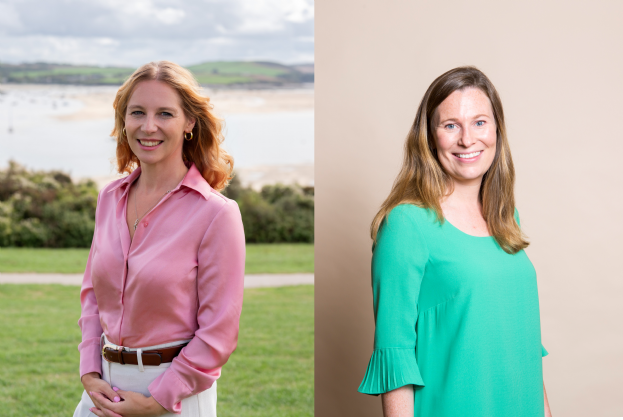
Contact Phillippa Dalby-Welsh or Tara Boulton
View available properties for sale


.jpg "Savills")



.jpg)
